Spared execution eight times, oldest inmate in US dies at 101

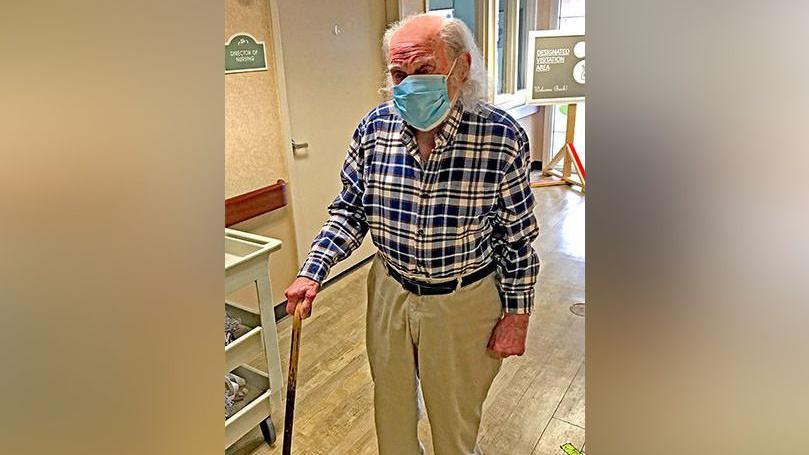
Table of Contents
US’s Longest-Serving Prisoner Dies at 101 After Eight Near-Executions
Ninoda.com – Francis Clifford Smith, who spent more than seven decades behind bars in Connecticut, passed away in June at the age of 101. His death marked the end of what had become the longest continuous prison sentence in American history. Eight times he was handed his final meal, only to be pulled back from the execution chamber each time.
A Conviction Built on Doubt
Smith was 25 when, in 1950, a jury found him guilty of first-degree murder. The victim was Grover Hart, a night watchman at a Connecticut yacht club, killed in 1949. Smith had been a minor offender before the accusation landed on him. Two men were arrested in connection with the killing; the other accepted a plea bargain and testified against Smith, sealing his conviction.
Yet questions about his guilt persisted for decades. Witnesses later recanted their testimony, and a different inmate eventually confessed to the killing. Major Leo Carroll, an officer who had interrogated Smith shortly after his arrest, told the Board of Pardons that he believed Smith was innocent.
“I’m not even sure he was present at the murder,” Carroll told the board, as reported by the Boston Globe.
Those lingering doubts ultimately saved his life. In 1954 his death sentence was commuted to life imprisonment.
The Birdman of Osborn
During his long tenure at Osborn prison, Smith developed a habit of feeding birds around the facility. Andrius Banevicius, public information officer for Connecticut’s Department of Correction, recalled the scene.
“He would stuff as much bread as he could … in his clothing,” Banevicius said. “Everyone kind of turned a blind eye to it because they knew he was just feeding the birds.”
The nickname “The Birdman of Osborn” stuck. Smith was also among the last surviving inmates from Alcatraz, a fact that drew renewed attention when President Trump floated plans to reopen the island prison.
Three Brief Stints Outside
Smith’s 70-plus years of incarceration were interrupted by three short periods of freedom. In 1967 he escaped from prison but was recaptured just 12 days later. In 1974 he was allowed home for Christmas Eve and returned the following day, Banevicius confirmed.
The third break came in 1975, when he was granted parole and spent roughly 10 months outside. He was quickly rearrested for petty larceny and possession of a weapon — violations of his parole conditions, according to the Boston Globe. Richard Sparaco, former executive director of what is now the Board of Pardons and Paroles, told the Hartford Courant that Smith turned down multiple subsequent parole attempts until 2020, when supervised parole was finally approved and he was transferred to a care home operated within the justice system.
An Aging Prison Population
Smith’s case sits within a broader demographic shift. Dr Stephanie Prost, a researcher studying older adults in prison settings at the University of Louisville, Kentucky, told the BBC that most jurisdictions face similar pressures.
“We’re not the only jurisdiction that’s facing that ageing-related crisis, because similar issues are percolating in Australia and England,” Prost said. “It’s an international issue in terms of the population. Although, of course, we have a larger number of individuals in the US.”
A 2025 study found that the number of prisoners aged 55 and older grew by nearly 400% between 1991 and 2021. The US Census Bureau projects that by 2030 at least one-third of the incarcerated population will be over 50. Researchers such as Prost advocate what they term “smart de-carceration” — policies including compassionate release and elderly or medical parole that factor in age and care needs. Older inmates face elevated rates of costly medical problems — fall risks, incontinence, hearing loss — that make functioning within a rigidly regimented prison environment increasingly difficult.
Experts note, however, that very few facilities are willing to accept convicted prisoners for long-term care.
Final Years and Death
At the time of his death, Smith was residing in a nursing facility under supervised parole. He was among the first recipients of care under the MissionCare Health scheme, which specializes in serving incarcerated individuals and currently operates three facilities in the north-eastern United States.
David Skoczulek, spokesman for 60 West — the facility where Smith spent his final years — told the BBC that Smith died peacefully in his sleep in June and was subsequently cremated.
“Essentially, he died of old age,” Skoczulek said. “He had very limited family involvement around his passing but we assured it was appropriate, met his wishes and was dignified.”
Skoczulek added that the facility’s role was to deliver the skilled nursing and long-term care services Smith required in his last years.
Related Reading
Frequently Asked Questions
What is Spared execution eight times oldest inmate?
Spared execution eight times oldest inmate is the main topic of this guide. The article explains the context, practical details, and next steps readers should understand.
Why does Spared execution eight times oldest inmate matter?
Spared execution eight times oldest inmate matters because readers are looking for a useful answer, not just a short summary. Good content should match search intent and help them decide what to do next.