UK government expected to announce restrictions on trade with West Bank settlements

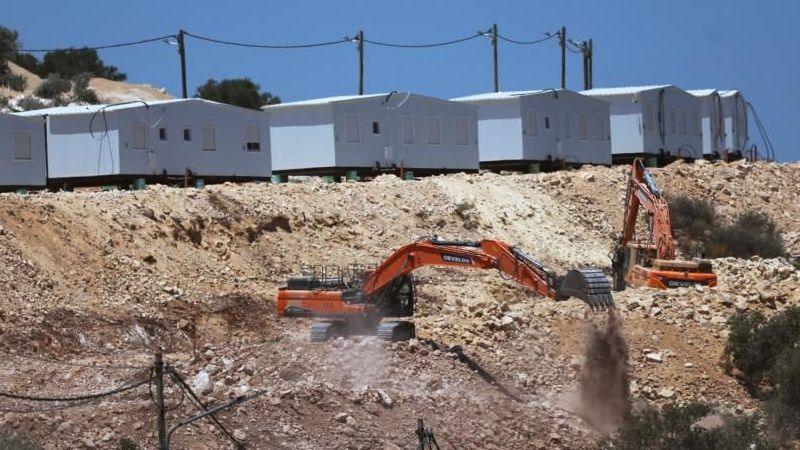
Table of Contents
Britain Prepares Trade Sanctions Against West Bank Settlements as Diplomatic Tensions Escalate
Ninoda.com – The UK government is preparing to impose trade restrictions on goods produced in Jewish settlements across the Israeli-occupied West Bank, marking what officials describe as the most significant shift in British policy toward Israel in years. Foreign Secretary Ed Miliband is set to present the measures in the House of Commons on Tuesday, following weeks of internal preparation and briefings to senior Labour colleagues.
The move arrives against a backdrop of sharply heightened regional tension. Israel recently opened tenders for the construction of roughly 1,200 new settlement homes in the so-called E1 corridor, a strategically sensitive stretch of land east of Jerusalem that has long been viewed as a potential dividing line between the two territories. International observers have condemned the plans, noting that Israel had deferred development in that zone for decades under sustained diplomatic pressure. Miliband, speaking in his first parliamentary address as foreign secretary last week, labelled the E1 proposals “illegal under international law” and described them as “the crossing of a red line, as it cuts through the heart of the West Bank and risks making a Palestinian state unviable.”
A “Complete Reset” of Britain’s Israel-Palestine Stance
One minister, speaking to reporters ahead of the announcement, framed the coming statement in sweeping terms:
“The statement will be a complete reset of the nature of our Israel-Palestine relationship. It will all feel very different. It is not just about sanctions. We hope that this will finally achieve what those of us who have been working towards for two years over the Middle East have been working on.”
Labour MPs who received advance briefings on the plans indicated that the sanctions would target both goods and services flowing from settlements deemed illegal under international law. Agricultural products are expected to feature prominently among the restricted categories, though the full scope of the measures has not been publicly detailed.
Prime Minister Andy Burnham confirmed to Labour MPs at their weekly parliamentary gathering on Monday evening that Miliband would deliver the statement. Burnham also told the meeting that he had briefed several international leaders by telephone on Monday afternoon about the planned measures.
Diplomatic Friction with Washington
Burnham spoke directly with US President Donald Trump on Monday. During the call, the prime minister underscored the importance of a two-state solution to the Israeli-Palestinian conflict. However, an official account of the conversation released by Downing Street did not specify that the sanctions themselves were discussed. The United States, widely expected to oppose the British proposals, has not issued a public comment.
The Israeli government, meanwhile, has previously signalled that it would retaliate should new restrictive measures be introduced by trading partners. For a country whose settlement economy, while modest in global trade terms, carries deep symbolic weight domestically, any formal British sanction regime is likely to be treated as a diplomatic provocation.
Expanding Sanctions Powers
The legal architecture underpinning the new measures has been under review for some time. Stephen Doughty, who served as Europe minister before being appointed Middle East minister, told the business select committee in July that existing statutory powers were insufficient for the task at hand.
“At the moment, we can sanction where there is evidence of it being linked to settler violence, but not, for example, in relation to a contractor working on the settlements. We need to expand our sanctions powers.”
That gap — the inability to reach commercial actors supplying settlements without a direct link to violence — appears to have been addressed in the new legislative framework now being deployed.
Symbolism, Substance, and Scale
Ministers are reportedly aware that the volume of trade involved — predominantly small-scale agricultural output — means the economic bite of the restrictions will be limited. The government nonetheless intends to present the announcement as a landmark recalibration of Britain’s broader posture on Israel, rather than a narrow trade measure.
The timing is deliberate. The expected intervention lands almost a year after Sir Keir Starmer’s government formally recognised a state of Palestine, declaring that Britain bore a moral responsibility to support a peaceful future for both Israelis and Palestinians. Since that recognition, the government has argued that the rapid expansion of settlements is actively undermining the viability of a two-state arrangement.
The Two-State Framework and Its Opponents
The two-state solution — an independent Palestinian state encompassing the West Bank and Gaza Strip, with East Jerusalem as its capital, existing alongside Israel — has enjoyed varying degrees of international endorsement over several decades. Israel rejects the concept outright. The Palestinian Authority endorses it, while Hamas opposes it on the grounds that it accepts Israel’s continued existence.
Burnham himself warned that Israel’s E1 announcement could “imperil or end” the two-state solution. The government’s position is that settlement growth, now encompassing approximately 160 settlements housing around 700,000 Jewish residents built since the 1967 Middle East war, is progressively rendering a contiguous Palestinian state geographically unworkable.
Recent months have also seen a marked increase in settler violence directed at Palestinians in the West Bank, a factor that has intensified domestic and international pressure on London to move beyond rhetorical condemnation toward concrete policy action. Whether Tuesday’s announcement will be received as the substantive step its architects intend, or dismissed as a largely symbolic gesture dressed in heavier language, will depend in large part on how the measures are implemented and enforced in the months ahead.
Related Reading
Frequently Asked Questions
What is UK government expected to announce restrictions?
UK government expected to announce restrictions is the main topic of this guide. The article explains the context, practical details, and next steps readers should understand.
Why does UK government expected to announce restrictions matter?
UK government expected to announce restrictions matters because readers are looking for a useful answer, not just a short summary. Good content should match search intent and help them decide what to do next.