
US Senate committee votes to hold Fauci in contempt over Covid hearing

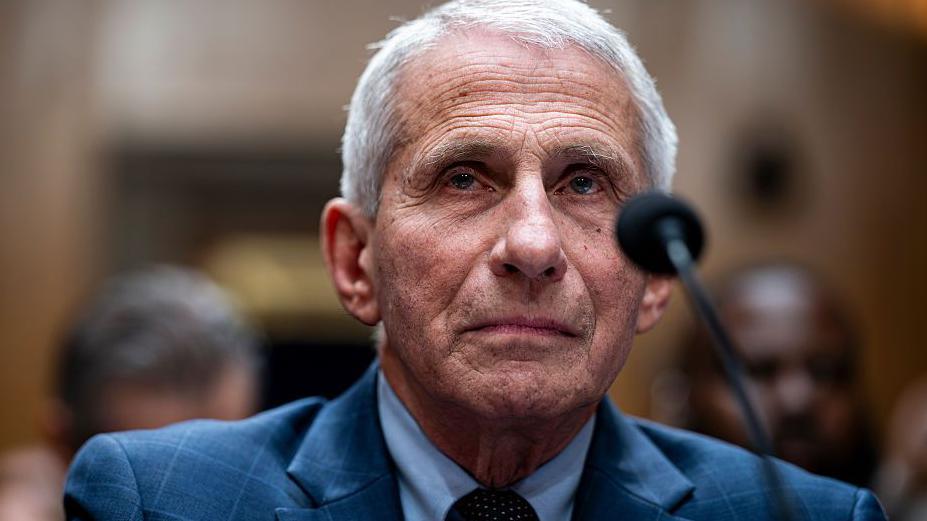
Table of Contents
Senate Panel Moves Forward With Contempt Vote Against Fauci
Ninoda.com – A congressional committee has decided to pursue contempt proceedings against Anthony Fauci, the former leading health authority, following his refusal to respond to inquiries during a session focused on pandemic management. The decision, which followed partisan divisions, allows the panel to forward the matter to federal prosecutors for possible legal action stemming from noncompliance with a congressional summons. It is still uncertain if prosecutors will take up the case.
While testifying earlier this week, Fauci exercised his constitutional protection against self-incrimination over one hundred occasions. He contended that Kentucky Senator Rand Paul intended to see him imprisoned. Following the committee’s decision, Fauci’s legal representative characterized the move as a “crude political stunt” aimed at “punish[ing] Dr Fauci for exercising his constitutional right.”
Background on Pandemic Origins Debate
The question of how the coronavirus outbreak began has generated considerable discussion within American politics. This includes disagreements between President Donald Trump, who occupied the Oval Office when the crisis started in 2020, and health experts like Fauci. For multiple years, Senator Paul has maintained that Fauci sought to conceal the virus’s beginnings and provided financial support to a laboratory located in Wuhan, China—a location where certain observers believe the outbreak originated through a laboratory accident.
According to most scientific consensus, transmission from an infected animal represents the more probable explanation for the pandemic’s emergence.
Legal Protections and Potential Charges
Former President Joe Biden issued Fauci a preemptive pardon on his final day in office during 2025. This protection shields the health official from federal prosecution regarding activities conducted between 2014 and 2025. Nevertheless, Fauci remains vulnerable to charges related to events occurring after that timeframe, including contempt of Congress violations. Additionally, state and local authorities could pursue charges that fall outside the scope of the presidential pardon.
Committee Proceedings and Political Context
Senator Rand Paul, the Kentucky Republican who chairs the committee, explained the basis for the vote before proceedings began. “The chair directed Anthony Fauci to answer. He refused,” Paul stated. “That is what we are voting on today — not his opinions, not his policies, not anything he said from the podium six years ago.”
“We are voting on whether a witness who has received the benefit of a federal pardon can be ordered by this committee to answer questions and then defy that order without consequence,” he added.
Michigan Senator Gary Peters, the committee’s senior Democrat, offered support for Fauci. Peters criticized Paul for conducting a “rushed investigation” and pursuing what he described as a “yearslong campaign” to bring charges against the former health official.
Fauci has consistently denied any misconduct. During his recent testimony, he suggested that Paul harbored an “obvious obsession” with prosecuting him. “The only conclusion I can reach is that the sole reason he is calling me before this committee is to get me to say something – anything – that could vindicate his repeated public pledges that I end up, in his words, ‘behind bars’,” Fauci explained.
Procedural Decisions and Legal Analysis
Paul chose to bypass the standard procedure of submitting the contempt resolution to a full Senate vote, stating he did not “want to waste time” on additional steps. Under normal circumstances, committee-passed contempt resolutions advance to the entire Senate, where they require sixty votes to pass. Republicans currently control fifty-three of the one hundred Senate seats.
David Schertler, Fauci’s attorney, released a statement urging senators to “reject Senator Paul’s meritless and politically-motivated contempt resolution.” “For years, Senator Paul has proclaimed to anyone who would listen that Dr Fauci should be prosecuted and put in prison,” Schertler remarked. “Dr Fauci has committed no crime — and Senator Paul knows it.”
Schertler previously expressed confidence that his client stands on “solid legal ground” moving forward, noting that while Paul “may be a doctor, but he is not a lawyer.” Paul served as an eye surgeon before winning election to the Senate in 2010.
In correspondence with CBS, the BBC’s American partner, Schertler emphasized: “We are completely confident that Dr Fauci has a valid Fifth Amendment privilege here and is on solid legal ground in asserting it.” Exercising the Fifth Amendment does not constitute an admission of wrongdoing; rather, it serves to shield individuals from coercion, errors, and unjust reallocation of the burden to demonstrate misconduct.
Contempt convictions remain uncommon. In 2024, Steve Bannon and Peter Navarro, both former associates of President Trump, received contempt convictions and jail terms—the first such convictions since the 1980s.
Related Reading
Frequently Asked Questions
What is US Senate committee votes to hold?
US Senate committee votes to hold is the main topic of this guide. The article explains the context, practical details, and next steps readers should understand.
Why does US Senate committee votes to hold matter?
US Senate committee votes to hold matters because readers are looking for a useful answer, not just a short summary. Good content should match search intent and help them decide what to do next.