Watch: BBC travels in self-driving Uber around London

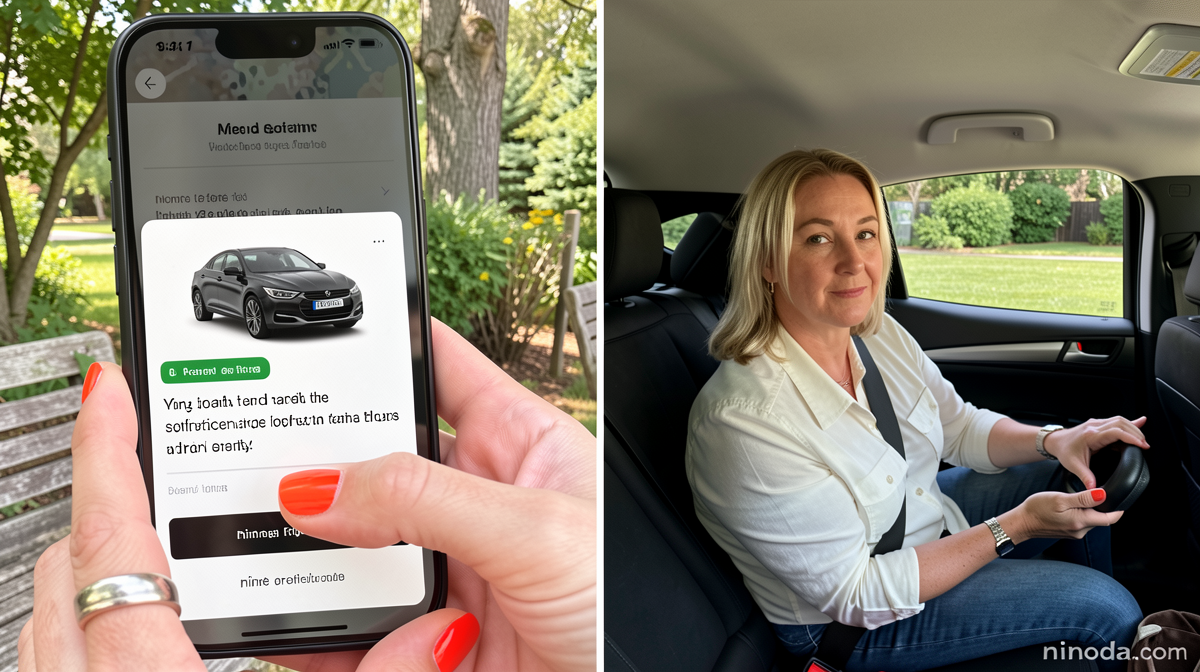
Table of Contents
London’s Streets Get Their First Robotaxi Fleet
Ninoda.com – For years, autonomous vehicle pilots in Britain have been confined to closed test tracks, limited demonstration routes, or small-scale trials involving a handful of vehicles. That era effectively ended on Thursday, when Uber opened its self-driving minicab service to the general public across London. The move makes the ride-hailing platform the first company in the United Kingdom to offer fully autonomous taxi rides to everyday commuters and visitors, placing the capital at the centre of a global race to commercialise driverless transport.
A Small Fleet, Big Implications
The initial deployment is modest in scale: fifteen autonomous vehicles have received a licence to operate within the city. Each car, however, is not truly unmanned. A trained human safety operator sits behind the steering wheel at all times, prepared to seize manual control the instant the system flags an anomaly or the environment presents a scenario the software cannot resolve. This hybrid arrangement reflects the current regulatory posture in Britain, where full driverless operation without any occupant remains outside the scope of existing type-approval and road-traffic legislation.
The presence of a safety driver means passengers will notice a person in the front seat, but that individual does not steer, brake, or accelerate under normal conditions. The vehicle’s perception stack — cameras, radar, and lidar working in concert — handles navigation, lane-keeping, intersection negotiation, and obstacle avoidance. The human’s role is supervisory and reactive, a final layer of redundancy rather than an active participant in driving.
Pricing and Accessibility
One of the more practical questions for riders is cost. Uber has confirmed that the robotaxi fare in the UK mirrors the pricing applied to its conventional tiers: UberX, Uber Electric, and Uber Comfort. Passengers see the full price displayed upfront in the application before confirming a booking, eliminating the uncertainty that sometimes accompanies surge pricing or distance-based estimates. There is no premium surcharge for riding in a vehicle that steers itself.
This pricing parity is significant. It signals that the company intends autonomous rides to compete head-to-head with human-driven options rather than to occupy a niche luxury segment. If the technology scales beyond fifteen cars, the economic argument for driverless operation — lower per-kilometre labour costs, higher vehicle utilisation rates — could eventually translate into cheaper rides, though that outcome depends on regulatory timelines and public acceptance.
The First British Journalist to Ride
Journalist Zoe Kleinman became the first British reporter to hail and complete a self-driving Uber trip in London, documenting the experience from the back seat. Her ride offered a real-time look at how the vehicle handles London’s dense traffic, unpredictable cyclist behaviour, and the city’s characteristic mix of double-decker buses, black cabs, and pedestrians who step into crossings without checking. The account underscored both the system’s competence in routine conditions and the residual caution built into its decision-making logic.
The experience of sitting in a car that navigates itself through London’s congestion is unlike any previous ride-hailing trip — the driver’s seat is occupied, yet no one is driving.
Regulatory and Urban-Planning Context
London’s entry into the robotaxi era did not happen in a vacuum. The UK government has been progressively updating its type-approval framework to accommodate vehicles with automated driving functions, and Transport for London has engaged with operators on route permissions, data-sharing obligations, and incident-reporting protocols. The fifteen-vehicle licence represents a phased approach: regulators want operational data from real-world conditions before authorising larger fleets or removing the safety-driver requirement entirely.
The city’s geography adds complexity. Narrow medieval streets in the City of London, roundabouts with no clear right-of-way cues, and temporary roadworks that reshape traffic patterns daily all present edge cases that laboratory testing cannot fully replicate. Operators must demonstrate that their systems degrade gracefully — slowing down, pulling over, or requesting human intervention — rather than failing catastrophically when confronted with novel scenarios.
What Comes Next
The Thursday launch is a proof-of-concept at commercial scale. Industry watchers will monitor several indicators in the months ahead: fleet size, geographic coverage beyond the initial operating zone, incident frequency, passenger satisfaction scores, and whether regulators grant permission to expand. Competitors, including other ride-hailing platforms and traditional taxi operators, are expected to file their own applications, potentially transforming London’s minicab landscape within a few years.
For the average commuter, the immediate takeaway is simple: a new option now appears in the booking app, priced identically to a conventional ride, with a car that drives itself through the city’s grid. Whether that option becomes routine or remains a curiosity will depend on engineering reliability, regulatory confidence, and the willingness of Londoners to trust a machine with their journey. The first fifteen vehicles are on the road. The question is how many more will follow.
Related Reading
Frequently Asked Questions
What is Watch: BBC travels in self-driving Uber around London?
Watch: BBC travels in self-driving Uber around London is the main topic of this guide. The article explains the context, practical details, and next steps readers should understand.
Why does Watch: BBC travels in self-driving Uber around London matter?
Watch: BBC travels in self-driving Uber around London matters because readers are looking for a useful answer, not just a short summary. Good content should match search intent and help them decide what to do next.