Watch: Nasa astronauts conduct 6.5-hour spacewalk outside ISS

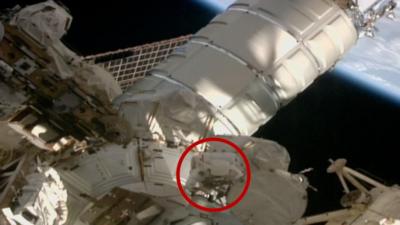
Table of Contents
Watch: Nasa astronauts conduct 6.5-hour spacewalk outside ISS
Ninoda.com – In a remarkable display of human ingenuity and engineering precision, Watch: Nasa astronauts conduct 6.5-hour spacewalk outside ISS captured the attention of space enthusiasts worldwide. Anil Menon and Jessica Meir, two accomplished Nasa astronauts, embarked on an extensive extravehicular activity (EVA) on Thursday to install critical mounting hardware on the International Space Station. This pivotal mission represents a significant milestone in the station’s ongoing evolution and expansion capabilities.
The primary objective of this ambitious spacewalk was to prepare the station’s 3B power channel for future installations. The newly installed mounting hardware will serve as the foundation for the upcoming deployment of advanced roll-out solar arrays, which promise to dramatically enhance the ISS’s power generation capacity. These solar arrays represent cutting-edge technology designed to provide more efficient and reliable energy for the orbital laboratory and its crew members.
Technical Details of the Spacewalk Mission
The 6.5-hour duration of the spacewalk demonstrates the complexity and importance of the tasks performed by Menon and Meir. Working in the harsh environment of space, the astronauts carefully maneuvered around the exterior of the station, securing the necessary components with precision. Each movement required careful coordination and communication with ground control teams, ensuring that every bolt and connection met the rigorous standards required for space operations.
“The installation of this mounting hardware is a crucial step toward modernizing the ISS power infrastructure,” noted a Nasa spokesperson following the successful completion of the mission. “These new solar arrays will provide significantly more power for scientific experiments and future station modules.”
Anil Menon, a veteran astronaut with extensive spaceflight experience, worked alongside Jessica Meir, who has also demonstrated exceptional capability during previous space missions. Together, they navigated the challenging conditions of the space environment, performing their tasks with the expertise that characterizes Nasa’s most accomplished crew members. Their collaboration exemplifies the teamwork essential for successful spacewalk operations.
Implications for Future Space Exploration
The successful completion of this spacewalk has far-reaching implications for the future of the International Space Station. The enhanced power capacity provided by the new roll-out solar arrays will enable more sophisticated scientific experiments and support potential expansion of the station’s capabilities. This upgrade positions the ISS to continue serving as a premier platform for international space research for years to come.
As space agencies around the world look toward long-term human presence in orbit, missions like this one demonstrate the ongoing commitment to maintaining and improving our orbital laboratory. The mounting hardware installed during this 6.5-hour spacewalk represents more than just physical components—it symbolizes humanity’s dedication to pushing the boundaries of what is possible in space exploration.
Frequently Asked Questions
Q: What is the purpose of the 3B power channel? A: The 3B power channel is one of the ISS’s main electrical distribution systems that will receive enhanced power capacity through the new roll-out solar arrays.
Q: How long did the spacewalk last? A: The spacewalk conducted by Anil Menon and Jessica Meir lasted exactly 6.5 hours, during which they installed critical mounting hardware.
Q: What are roll-out solar arrays? A: Roll-out solar arrays are advanced photovoltaic panels that can be deployed from compact storage configurations, providing more power than traditional rigid solar panels while requiring less launch volume.
Q: Why is this spacewalk important for future missions? A: The enhanced power capacity will support additional scientific experiments, enable potential station expansion, and improve overall operational efficiency for the ISS.