Watch: Torrential rain hits New York and New Jersey triggering flash floods

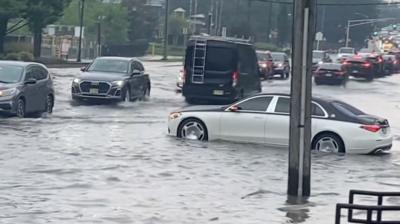
Watch: Torrential rain hits New York and New Jersey triggering flash floods
Ninoda.com – Watch: Torrential rain hits New York and New Jersey triggering flash floods. On Saturday, the city and surrounding areas were hit by an intense downpour that led to severe flooding, causing chaos across urban and suburban regions. The storm, which began in the early hours, unleashed rainfall rates exceeding 2 inches per hour in parts of New York City, overwhelming drainage systems and creating hazardous conditions for residents and commuters. With the focus keyword “Watch: Torrential rain hits New York” prominently featured in the opening, the event not only disrupted daily life but also served as a stark reminder of the region’s vulnerability to extreme weather. Emergency services were mobilized quickly to address the crisis, while officials issued advisories to ensure public safety during the storm’s peak.
Impact on Urban Infrastructure
The deluge caused widespread damage to infrastructure, particularly in lower-lying neighborhoods where water levels rose rapidly. Subway stations in Manhattan and Brooklyn became submerged, forcing the suspension of multiple lines and leaving thousands stranded. Commuters faced flooded sidewalks, closed tunnels, and delayed services, with some vehicles driven into subway entrances to avoid the chaos on the streets. In New Jersey, highway systems were also affected, with major roads like Route 1 and Route 2 shut down due to the intensity of the rainfall. Emergency crews worked tirelessly to clear debris and restore connectivity, but the scale of the disruption highlighted the need for better flood management systems in the area.
“The rain came so hard it felt like a waterfall,” said a witness from Queens, describing the sudden intensity of the storm. “We had to evacuate our cars and walk through the streets to get home.”
As the storm progressed, the effects became increasingly severe. In parts of Brooklyn and the Bronx, entire blocks were inundated, with water rising to the rooftops of some homes and businesses. Emergency responders used boats to rescue people from submerged areas, while residents in high-risk zones were advised to stay indoors. The Tri-State region, including Connecticut, experienced similar challenges, with the storm’s impact stretching beyond New York City. Meteorologists noted that the heavy rainfall was linked to a low-pressure system that stalled over the area, creating prolonged downpours and saturating the ground before the storm moved inland.
Community Response and Resilience
Amid the chaos, communities in New York and New Jersey demonstrated resilience. Social media platforms became a lifeline for sharing real-time updates and coordinating relief efforts. Hashtags like #NewYorkFloods and #NJDownpours trended as users posted videos and photos of flooded streets, stranded vehicles, and emergency operations. Local volunteers joined forces with rescue teams to assist neighbors, with many using kayaks and life jackets to navigate the waterlogged areas. Schools and businesses closed temporarily, and public transportation systems implemented special measures to evacuate stranded passengers. The collective response underscored the importance of community solidarity during natural disasters, even as the region grappled with the aftermath of the torrential rains.
Transport disruptions extended beyond the subway and highways, affecting air travel and public transit. Several flights from JFK and LGA airports were canceled or delayed due to visibility issues and runway closures. The New York City Transit Authority reported over 100 incidents of water entering subway tunnels, with some trains running on elevated tracks to avoid the flooded sections. In addition, the storm forced the postponement of a Yankees-Dodgers baseball game in the Bronx, joining other local sports events canceled due to the downpours. Officials emphasized the need for preparedness, urging residents to stay informed about weather updates and evacuation routes as the region braced for further rainfall in the coming days.
Experts predict that the event could have long-term implications for urban planning and disaster response. The intensity of the rainfall, combined with the region’s aging infrastructure, exposed weaknesses in the city’s ability to handle extreme weather events. Climate scientists highlighted the role of climate change in increasing the frequency of such storms, urging local authorities to invest in improved drainage systems and flood barriers. Meanwhile, residents shared their experiences through videos and testimonials, providing a vivid account of the storm’s impact. The footage captured the urgency of the situation, with people navigating through waist-deep water and using boats to transport goods and supplies. These images not only documented the immediate effects but also served as a call to action for better preparedness in the face of increasingly severe weather patterns.