Lutkenhaus, 17, upsets Olympic champion Wanyonyi in Oslo

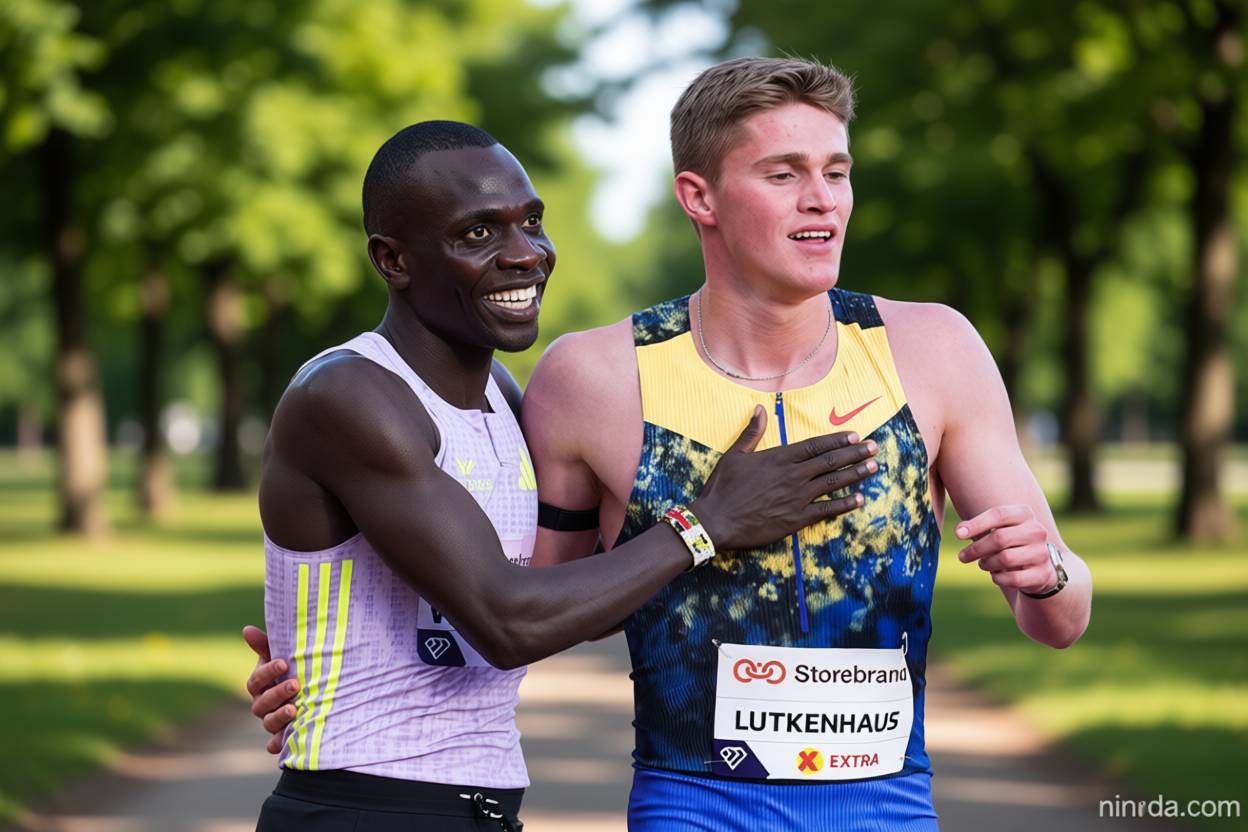
Table of Contents
Lutkenhaus, 17, upsets Olympic champion Wanyonyi in Oslo
Ninoda.com – At the Oslo Diamond League event, 17-year-old American sprinter Cooper Lutkenhaus made history by defeating Olympic champion Emmanuel Wanyonyi in the men’s 800m race. The young prodigy’s performance was nothing short of extraordinary, as he claimed victory with a personal best time of 1:42.08, edging out the seasoned Kenyan athlete by just a fraction of a second. Wanyonyi, who had previously set his season’s fastest time at 1:42.09, admitted the race tested his mental resilience and physical preparedness.
The Race That Shook the Track
The men’s 800m final in Oslo was a thrilling display of athletic prowess and unexpected drama. Lutkenhaus, who had already made a name for himself as a rising star in the world of middle-distance running, delivered a performance that will be remembered for years. His victory not only showcased his talent but also signaled a potential shift in the competitive landscape of the sport. Wanyonyi, a multiple world champion and Olympic medalist, had entered the race as a favorite, yet the young American’s tenacity proved to be his undoing.
A Star on the Rise
Cooper Lutkenhaus’s win in Oslo was a defining moment in his career, highlighting his potential to challenge established names in the athletics world. At just 17, he demonstrated maturity and composure that belied his age, as well as an ability to perform under intense pressure. This victory came after a series of strong performances in regional competitions, where he consistently outperformed older athletes, building confidence for this high-stakes event. His time of 1:42.08 not only secured gold but also marked a significant milestone for a teenager competing against Olympic champions.
The Champion’s Reflection
Emmanuel Wanyonyi, after the race, gave credit to Lutkenhaus for his impressive display. “This boy is in a good shape,” Wanyonyi said, acknowledging that the young American’s form was a challenge even for a seasoned Olympic champion. The 26-year-old Kenyan, who had missed the previous event in Sweden due to the birth of his first child, admitted that his focus on setting a personal best left him vulnerable in the final stretch. “I started the race in front and after 600m to go, I tried to see who is coming to push me. Then I saw him passing me, so I tried to respond. But my target today was to run my season best, to improve,” he explained.
While the men’s 800m captured the spotlight, the women’s races also delivered memorable moments. British sprinter Amy Hunt claimed second place in the 100m with a time of 10.99 seconds, while St Lucia’s Julien Alfred, the reigning Olympic champion, secured the win in 10.76 seconds. In the women’s 400m, Norway’s Henriette Jaeger claimed a podium finish, and Amber Anning of Great Britain finished fourth. Meanwhile, Jake Wightman, another British athlete, placed fifth in the Dream Mile, finishing behind Kenya’s Timothy Cheruiyot.
Broader Implications for the Sport
Cooper Lutkenhaus’s victory in Oslo has sparked conversations about the future of middle-distance racing. At 17, he joins a rare group of athletes who have disrupted the traditional hierarchy in track events. His performance underscores the importance of nurturing young talent, as it highlights how the next generation is not only catching up to, but in some cases, surpassing, veteran competitors. This win could also be a turning point for Lutkenhaus, potentially opening doors to higher-profile competitions and further opportunities to test his abilities against the world’s best.
For Wanyonyi, the loss was a humbling yet valuable experience. Despite the setback, he remains a dominant force in the sport, having consistently ranked among the top runners in the world. His ability to adapt and stay focused, even after a narrow defeat, speaks to his professionalism and determination. The 17-year-old’s win, however, serves as a reminder that age is no barrier to success in athletics, especially when talent and preparation align.