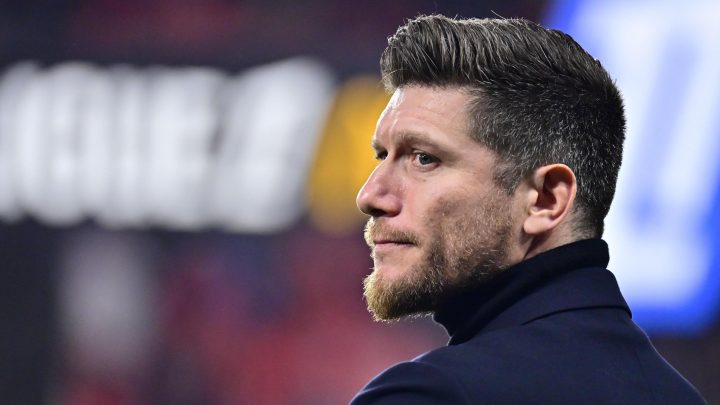
O’Neill safest of safe bets as Celtic opt against another gamble


O’Neill Safest of Safe Bets as Celtic Opt Against Another Gamble
Ninoda.com – With the Scottish Premiership title secured and the Scottish Cup victory celebrated, Martin O’Neill remains the safest of safe bets for Celtic’s managerial future. The club’s board has chosen to reappoint the veteran coach, recognizing his proven track record and the stability he brings after a season of challenges. His calm, measured leadership has been instrumental in steering Celtic through a demanding campaign, and the decision to stick with him signals a calculated move rather than a desperate one. O’Neill’s tenure has not only reinforced his reputation as a reliable tactician but also highlighted the importance of continuity in maintaining competitive success.
O’Neill’s management style has always been deliberate, combining experience with a pragmatic approach. While he often projected an air of detachment during the season, his influence was evident in the team’s cohesion and resilience. The manager’s ability to instill confidence in players and foster a strong connection with fans has been a consistent strength, even as he maintained a low-profile public persona. His tactical acumen and composure under pressure proved invaluable, particularly in the final stretch of the season when Celtic faced key rivals. By opting for O’Neill, the board has prioritized reliability over the risk of untested strategies, ensuring the team remains focused on incremental progress.
A Legacy of Stability and Success
Over the years, O’Neill has established himself as a cornerstone of Celtic’s success. His long-standing relationship with the club, dating back to his early days as a player, has given him a deep understanding of its culture and ambitions. The board’s decision to reappoint him underscores their belief in his ability to maintain the high standards Celtic is known for. This choice also reflects a desire to avoid the uncertainty that comes with hiring a new manager, especially in a season where consistency is crucial. O’Neill’s leadership has not only guided the team to domestic triumphs but also helped navigate high-stakes matches with composure.
“The job is draining,” O’Neill admitted, yet his actions suggested otherwise. His presence was a unifying force, even as tensions simmered between supporters and the board. By choosing to remain, he has demonstrated an unwavering commitment to Celtic’s long-term vision, despite the pressures of last season’s close call in the Scottish Premiership.”
O’Neill’s reappointment also aligns with Celtic’s broader strategy of nurturing existing talent. While the club has historically relied on high-profile signings, the manager’s focus on developing squad depth has shown promising results. This approach, though less flashy, has ensured that Celtic remains competitive without relying solely on expensive transfers. The board’s decision to avoid another gamble—whether on a new manager or a bold recruitment strategy—highlights their confidence in O’Neill’s ability to deliver sustainable success.
Challenges in the Transfer Market
Celtic’s transfer market has been a source of both praise and criticism. Despite securing the league title, the recruitment process has been described as reactive and haphazard. O’Neill, who had to defend the lack of progress during the January transfer window, has seen mixed results from his signings. Five players on loan—Benjamin Arthur, Joel Mvuka, Junior Adamu, Tomas Cvancara, and Alex Oxlade-Chamberlain—highlight this, with only Oxlade-Chamberlain contributing meaningful goals. The reliance on loan deals suggests a need for more strategic planning in the squad’s development, which O’Neill has been tasked with addressing.
While O’Neill’s tactical acumen has been a constant, the transfer market’s inconsistencies have created uncertainty. The manager’s ability to manage these challenges while keeping the team focused on their objectives is a testament to his adaptability. However, the lack of long-term planning has raised questions about Celtic’s commitment to building a balanced squad. The board’s decision to keep O’Neill in charge may be a way to stabilize this process, ensuring that the manager’s vision can be