Political tension has undermined World Cup joy, says Iran striker

Political Tensions Cast Shadow Over Iran’s World Cup Experience
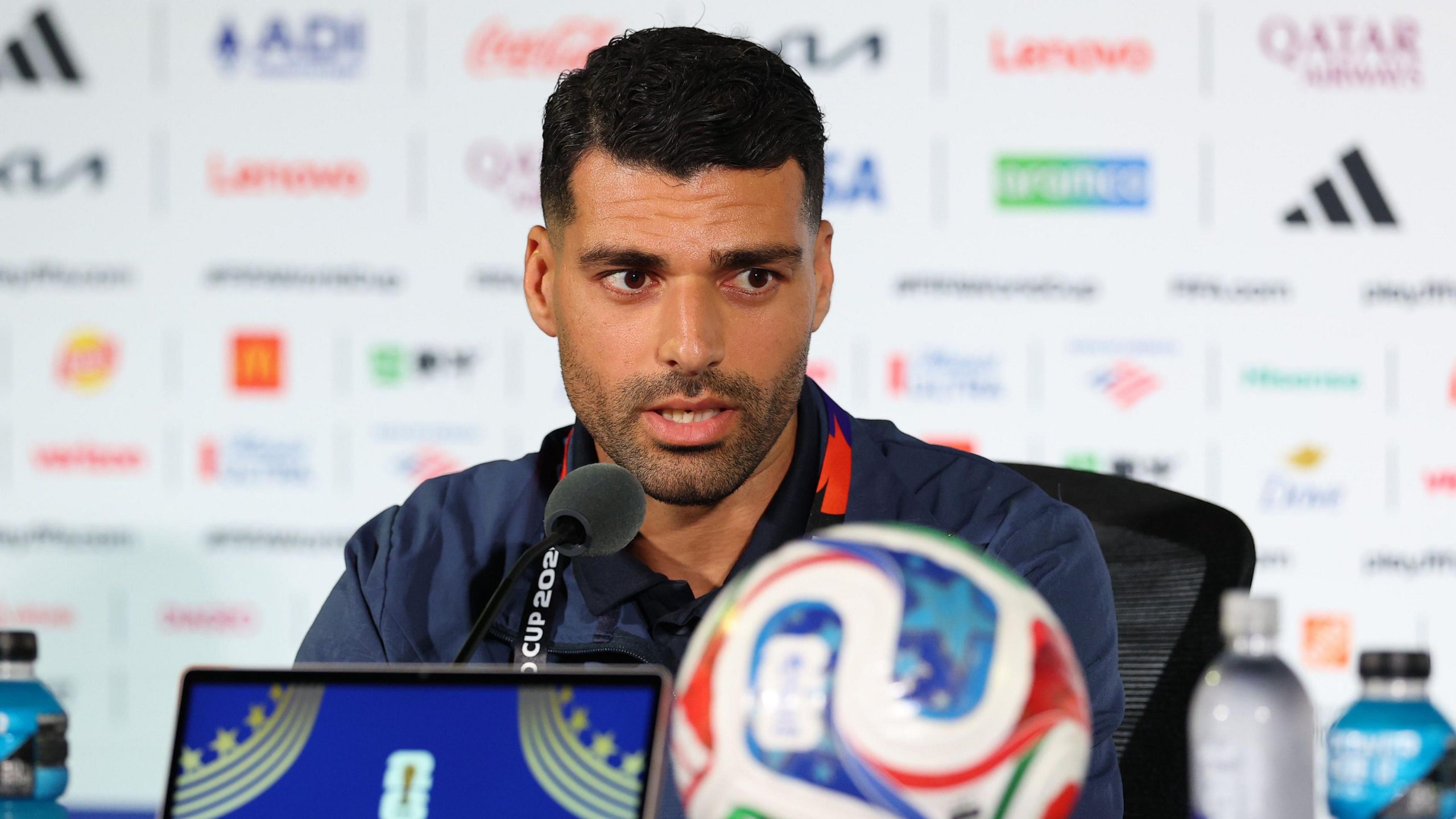
Ninoda.com – Mehdi Taremi, Iran’s forward, has represented his nation 105 times and played in the 2018 and 2022 World Cups. Yet, this time around, his team’s journey to the tournament has been marked by more than just footballing challenges. The squad has navigated visa complications, logistical shifts, and a backdrop of intense geopolitical rivalry with the United States, which has been at war with Iran until recently.
As the team prepares to compete in Los Angeles, the city known as “Tehrangeles” to many Iranian-Americans, they face an unusual blend of anticipation and scrutiny. The recent agreement to pause hostilities and reopen the Strait of Hormuz, announced on Sunday, has somewhat缓解 concerns about further conflict, but lingering tensions remain. “This kind of tension undermines the joy of the World Cup,” said Taremi. “I felt it from the first moment we arrived. The pressure started even before we stepped off the plane.”
Relocation Amid Uncertainty
Iran’s base camp was moved from Tucson, Arizona, to Tijuana, a Mexican border city, due to ongoing political and security concerns. Manager Amir Ghalenoei explained that the relocation was a necessary response to the challenging environment surrounding the team’s participation. “This behaviour has impacted the spirit of football,” he noted. “It’s about bringing nations and cultures together, but these conditions have affected our focus.”
Despite the upheaval, Ghalenoei emphasized the players’ dedication. “They are committed to performing,” he said, highlighting their resolve to stay focused on the game. The squad’s arrival in Los Angeles on Sunday was a pivotal moment, as they transitioned from Tijuana with limited time to settle into their new surroundings.
Diaspora’s Response to Flag Ban
FIFA’s decision to ban the pre-revolutionary Lion and Sun flag has sparked frustration among Iranian-Americans. The flag, a powerful emblem of national pride for many abroad, is now excluded from displays during the tournament. Activist Arezo Rashidian, organizing protests outside SoFi Stadium, criticized the move. “You don’t come to Los Angeles and tell us we can’t fly the Lion and Sun flag,” she said. “This is the largest Iranian community outside the country.”
Rashidian argued that the ban has alienated parts of the diaspora, some of whom view the team as a symbol of Iran’s government. “It’s unfortunate that the regime turns athletes into mouthpieces,” she added. “We want them to stay focused on the game.” Still, she and others plan to attend the match, supporting Iran as a nation under Islamic Republic rule.
For the players, the focus remains on football. “We play for every Iranian, whether in the diaspora or at home,” Taremi said. “People have different opinions, but our goal is to unite them and bring joy through sport.” However, the political climate makes it hard to keep politics out of the spotlight. As investigative journalist Samindra Kunti observed, “There is no winning for Iran’s team. Everything becomes a reminder of their situation.”
With pressure coming from all sides—home, the host nation, and the diaspora—Iran’s squad must navigate a complex landscape before the first match even kicks off. The World Cup, once a celebration of unity, now carries the weight of geopolitical divides.