
Great Apes kiss and cuddle to keep the peace, says study

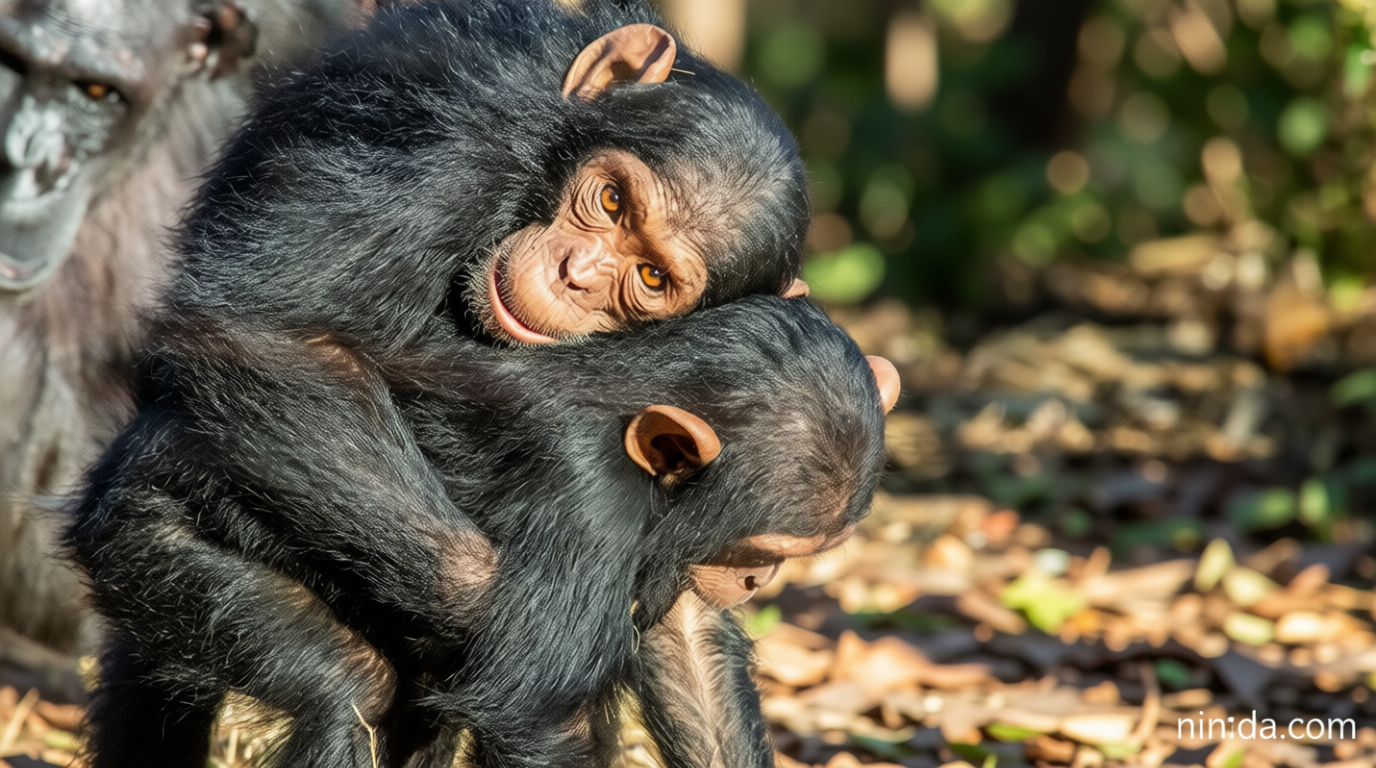
Table of Contents
Great Apes kiss and cuddle to keep: Great Apes Kiss and Cuddle to Maintain Social Harmony Ninoda.com – Recent research reveals that great apes kiss and
Great Apes Kiss and Cuddle to Maintain Social Harmony
Ninoda.com – Recent research reveals that great apes kiss and cuddle as a sophisticated method of conflict prevention, demonstrating that physical affection plays a crucial role in maintaining social bonds before potential disputes arise. Scientists at Durham University have uncovered compelling evidence that chimpanzees and bonobos actively use touch and closeness to reassure one another when anticipating competition for valuable resources. This fascinating discovery sheds new light on the evolutionary origins of human social behavior and suggests that our closest living relatives share fundamental strategies for managing tension and cooperation.
Research Methodology and Sanctuary Observations
The comprehensive investigation was conducted across two sanctuary locations situated in Zambia and the Democratic Republic of Congo, providing researchers with diverse observational settings. To accurately replicate natural feeding conditions found in the wild, the scientific team introduced peanuts as a highly desirable food source for the apes. The researchers carefully monitored the animals during a critical five-minute window before the peanuts were distributed, a crucial period when the great apes were fully aware that nourishment was imminent and competition was likely to follow.
During this observation timeframe, the team documented various forms of reassuring physical interaction between the apes. These behaviors included warm embraces, gentle touches across the body, and even tender kissing. One particularly notable behavior involved chimpanzees inserting their fingers into each other’s mouths—a gesture that surprised many observers given the species’ well-documented reputation for aggression and territorial behavior.
Key Findings on Physical Affection and Social Success
The collected data revealed compelling patterns showing that individuals engaging in more physical contact had greater success accessing food and maintaining peaceful coexistence with other group members. Groups demonstrating higher tolerance levels exhibited what the researchers termed “reassurance trains,” where several apes would embrace one another in a continuous chain of affection, creating a visible network of social bonding.
“Before stressful events, they come together, they reassure each other, they touch each other, they hug each other,” explained Professor Zanna Clay, one of the lead researchers on the project.
She characterized this collective behavior as resembling a football team’s huddle before an important match—a moment of unity rather than individualism, where the group functions as a cohesive unit. This comparison helps illustrate how great apes kiss and cuddle to create a sense of togetherness that strengthens their social fabric.
“It’s like a ‘we’ rather than a ‘me’,” she added, emphasizing the collective nature of this behavior.
Evolutionary Significance and Human Connections
Dr Jake Brooker emphasized that comparing our two closest living relatives provides valuable understanding of how social tension, competition, and cooperation have been managed throughout evolutionary history. This comparative approach offers unprecedented insights into the behavioral foundations that shaped human social development.
“Comparing bonobos and chimpanzees – our two closest relatives – offers fascinating insight into the evolutionary roots of social behaviour and how they, and we, manage tension, competition and cooperation,” he stated.
According to the researchers, social touch represents one of humanity’s oldest communication methods, potentially emerging long before the development of language. They estimate this practice extends back approximately seven million years, predating the divergence of humans, chimpanzees, and bonobos from their shared ancestor. This timeline suggests that the instinct to seek physical closeness is deeply embedded in our genetic heritage.
The study suggests that modern human gestures—such as gathering in huddles, embracing teammates, or offering shoulder pats—draw upon a behavioral toolkit established millions of years ago. These seemingly simple actions carry profound evolutionary significance, connecting contemporary humans to their primate ancestors through shared patterns of affection and reassurance.
The complete research findings appear in the prestigious journal Proceedings of the Royal Society B: Biological Sciences, providing peer-reviewed validation for these groundbreaking observations.
Related research indicates that kissing behavior may have originated even earlier, with scientists suggesting the practice dates back 21 million years. This additional evidence reinforces the idea that great apes kiss and cuddle as fundamental expressions of social bonding that have persisted through millions of years of evolution, forming the bedrock of primate and human social relationships alike.
Related SEO Topics
Frequently Asked Questions
What is Great Apes kiss and cuddle to keep?
Great Apes kiss and cuddle to keep is the main topic covered in this article, with practical context to help readers understand the subject clearly.
Why does Great Apes kiss and cuddle to keep matter?
Great Apes kiss and cuddle to keep matters because it helps readers compare options, avoid common mistakes, and make a more informed decision.
How should readers use this Great Apes kiss and cuddle to keep guide?
Use the key points, examples, and related links in this page as a starting point, then review the latest details before making a final decision.