In Odesa, no-one is safe from Russia’s new Black Sea strikes

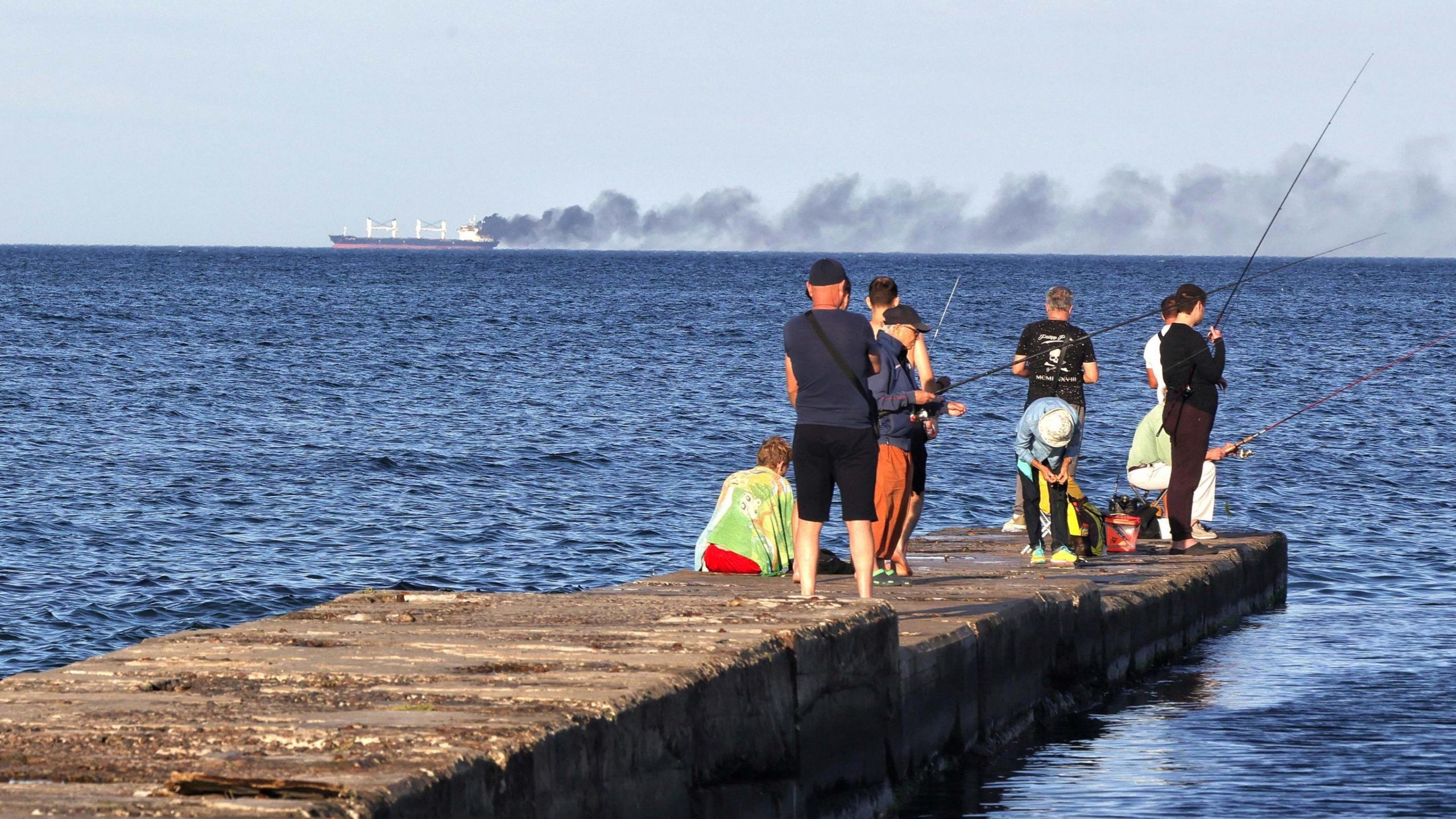
Table of Contents
Ukraine’s Black Sea Ports Face Unprecedented Russian Assault
Ninoda.com – The commercial lifelines connecting Ukraine to global markets are under siege as Moscow intensifies its campaign against the nation’s Black Sea harbors. Ships with charred superstructures and containers still burning dot the waters, while once-thriving port approaches now appear nearly deserted.
A Personal Toll on Port Workers
Svitlana Halchenko, who manages warehouse operations at Odesa’s primary port, carries visible scars from a Russian ballistic missile strike that claimed the lives of her coworkers. “My crane operator, my partner, died five metres from me… The driver remained in the cabin. He also died,” she recalls, wincing at the memory.
Despite shrapnel still lodged in her leg and back, and a permanent limp, Svitlana refuses to abandon her post. Yet the once-bustling facility has fallen eerily quiet. Her composure falters during conversations as she twists a tissue in her fingers and gazes toward the horizon, tears gathering behind her glasses.
The past several weeks have proven particularly harrowing. “It’s been very difficult for morale,” she explains with a heavy sigh. “A lot of sirens, a lot of shaheds [drones], a lot of hits. People are very tense.”
Escalating Threats to Maritime Commerce
Ukrainian port authorities report that July witnessed 57 Russian strikes against civilian vessels, with 22 occurring on open water. An additional 67 impacts damaged port infrastructure. While international ships have faced Russian attacks previously, the frequency and lethality have reached unprecedented levels.
On July 19, the Turkish-owned cargo ship Golden Leo endured three missile strikes, resulting in the deaths of nine Indian and Syrian crew members alongside a Ukrainian pilot. The vessel, transporting Ukrainian corn, eventually sank off Odesa’s coast one week later.
Lloyd’s List, the international shipping publication, has declared the Black Sea potentially the world’s most hazardous waters for maritime traffic, with July marking the deadliest month for merchant sailors since Russia launched its full-scale invasion.
Workers Fear the Port More Than the Front
Oleg Grygoriuk, who chairs the Marine Transport Workers Union of Ukraine, reports that his members face mounting anxiety. “There are a lot of veterans who already served their country,” he notes, “and they literally say that being in the port is more scary than being on the front line.”
Odesa’s closeness to Russian-occupied zones leaves workers with minimal warning. “A missile flies from Crimea within a minute,” he explains. “If you are sitting in a crane, you need three and a half minutes to get down and go to the shelter. There’s literally no time to do that.”
During a recent inspection of one of the region’s principal ports, nearly all activity had ceased. Hundreds of meters of berths remained vacant while massive gantry cranes stood motionless, operated only by a minimal maintenance team.
Systematic Disruption of Trade
Two heavily damaged cargo ships lay moored nearby, both suffering extensive destruction to their superstructures where bridges and crew quarters reside. Only a single freighter could be spotted navigating toward the harbor.
“My heart is broken,” a senior manager confessed, requesting anonymity. “Normally there’s a queue, even out at sea, waiting for a berth.”
He referenced the UN-brokered 2022 Black Sea Grain Initiative, which secured Russian agreement to remove its blockade on Ukrainian agricultural shipments. The arrangement created protected maritime routes to Odesa’s principal harbors.
“They stopped the deal in the middle of 2023, but they didn’t start attacking it until recently,” the manager observed. “Today they do it systematically.”
Midway through our tour, warning sirens blared, compelling us to take cover for several minutes as a Russian jet-powered drone passed overhead. Exhausted dock workers checked their mobile devices for updates until the all-clear signal sounded.
According to the manager, recent alerts have compelled the port to close for 15 of every 24 hours. Though technically operational, along with neighboring facilities, commercial activity remains severely constrained.
“My crane operator, my partner, died five metres from me… The driver remained in the cabin. He also died.”
“There are a lot of veterans who already served their country, and they literally say that being in the port is more scary than being on the front line.”
Related Reading
Frequently Asked Questions
What is In Odesa no one is safe?
In Odesa no one is safe is the main topic of this guide. The article explains the context, practical details, and next steps readers should understand.
Why does In Odesa no one is safe matter?
In Odesa no one is safe matters because readers are looking for a useful answer, not just a short summary. Good content should match search intent and help them decide what to do next.