
Russian strikes kill nine and set historic cathedral in Kyiv ablaze

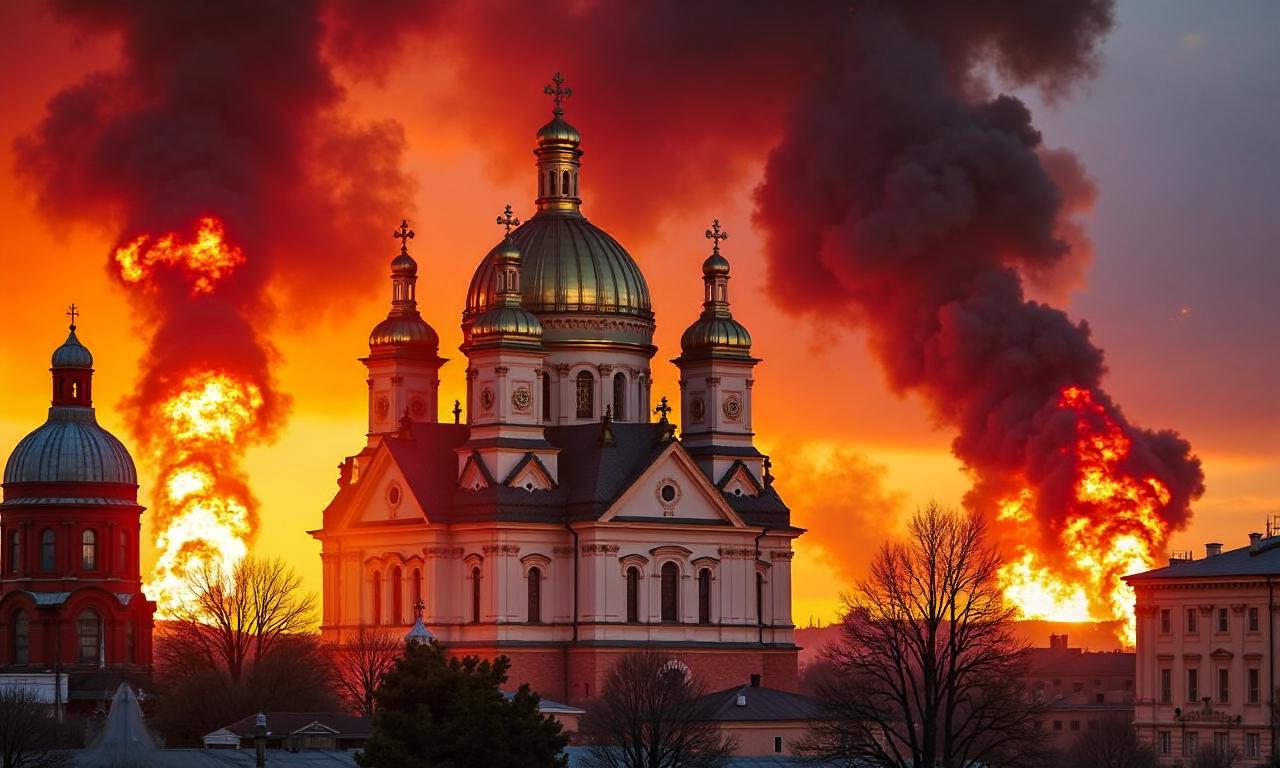
Russian Strikes Kill Nine, Historic Kyiv Cathedral Flames
Ninoda.com – The Russian strikes that killed nine civilians and set fire to the historic Dormition Cathedral in Kyiv have sent shockwaves through Ukraine’s cultural landscape. On Monday, a series of attacks targeted key cities, with Kyiv bearing the brunt of the devastation. The 11th-century cathedral, one of the most iconic landmarks in the country, was reduced to smoldering ruins, marking a devastating blow to Kyiv’s heritage. Ukrainian officials confirmed at least nine deaths, including four civilians in Kyiv and five rescue workers in Kharkiv, as the flames spread rapidly. The attack, described by Prime Minister Yulia Svyrydenko as a “brutal assault on our citizens and cultural heritage,” has intensified concerns over the ongoing conflict’s impact on historical sites.
Residents in Kyiv faced the harrowing reality of war as air raid sirens blared across the city. The cathedral, which has stood for over a millennium, was not only a place of worship but also a symbol of Kyiv’s enduring spirit. Its destruction has been compared to the damage inflicted during World War Two, when the site was nearly obliterated. Ukrainian Foreign Minister Andrii Sybiha called for global solidarity, stating in a statement on X:
“We will be urgently initiating all relevant procedures within UNESCO and other international mechanisms, demanding immediate and adequate responses to this state barbarism.”
The tragedy has sparked widespread outrage, with activists and historians condemning the deliberate targeting of such a revered structure. Meanwhile, the strikes in Kharkiv left five rescue workers dead, highlighting the dangers faced by those trying to protect civilians and infrastructure from Russian attacks.
A Symbol of Resilience and Ruin
The Dormition Cathedral, part of the Kyiv-Pechersk Lavra—a UNESCO World Heritage Site—has endured centuries of upheaval. Its reconstruction in the 1970s and 1980s was a testament to Ukraine’s determination to preserve its history. Yet, the recent fire threatens to erase another chapter of its storied past. The cathedral’s spires, which once soared above the city, now stand as charred remnants, drawing comparisons to the destruction seen in other parts of the war-torn nation. Experts warn that such attacks are not only symbolic but also strategic, aiming to undermine Ukraine’s cultural identity and morale.
As the G7 summit in France continues, the crisis in Ukraine remains at the forefront of global discussions. Ukrainian President Volodymyr Zelensky’s recent meeting with US President Donald Trump underscored the urgency of securing international support to counter Russian aggression. The full-scale invasion launched by Vladimir Putin nearly two years ago has led to widespread devastation, with the latest strikes in Kyiv and Kharkiv intensifying the human and structural toll. Over 140,000 people in Kyiv are now without electricity, adding to the challenges of daily life amid the ongoing war. The strikes have also forced evacuations and disrupted critical services, leaving communities in turmoil.
International Response and Historical Context
Ukrainian officials are appealing to UNESCO and other international bodies for urgent aid and recognition of the damage to the cathedral. The organization, which has documented the site’s significance, is expected to issue a statement condemning the attack. Historians note that the cathedral’s destruction represents a calculated effort to erase Ukraine’s historical roots, echoing the tactics used in previous conflicts. The blaze, which burned for hours, has raised questions about the effectiveness of fire-fighting efforts in the face of relentless Russian attacks. With over 140,000 Kyiv residents displaced, the city’s resilience is being tested, but its cultural institutions remain a focal point of national pride.
Meanwhile, the broader conflict continues to escalate, with Russian strikes targeting both military and civilian areas. The recent attacks in Kyiv and Kharkiv have drawn comparisons to the bombings of World War Two, but the scale and frequency of modern strikes reflect a more sustained and aggressive campaign. The use of drones and artillery in Tula, a city in Russia’s south, has also highlighted the symmetry of the conflict, as both sides face similar challenges in protecting their cities. The human cost of these strikes is staggering, with Ukrainian civilians bearing the brunt of the violence. As the war enters its third year, the focus remains on the survival of both people and landmarks, underscoring the deepening crisis in Ukraine.
The attacks on the Dormition Cathedral have ignited a fierce debate about the role of cultural preservation in wartime. While some argue that such symbolic targets are inevitable in a protracted conflict, others view them as deliberate acts of psychological warfare. The cathedral’s location near the city center made it a prime target, and its destruction has sent a clear message about the Russian strategy to undermine Ukraine’s historical and cultural foundations. As the flames were finally extinguished, the city mourned, with many questioning how such a vital site could be so easily compromised in the chaos of war.