Whale graveyard dating back five million years discovered

Whale Graveyard Dating Back Five Million Years Discovered
A Unique Underwater Fossil Site Reveals Ancient Marine History
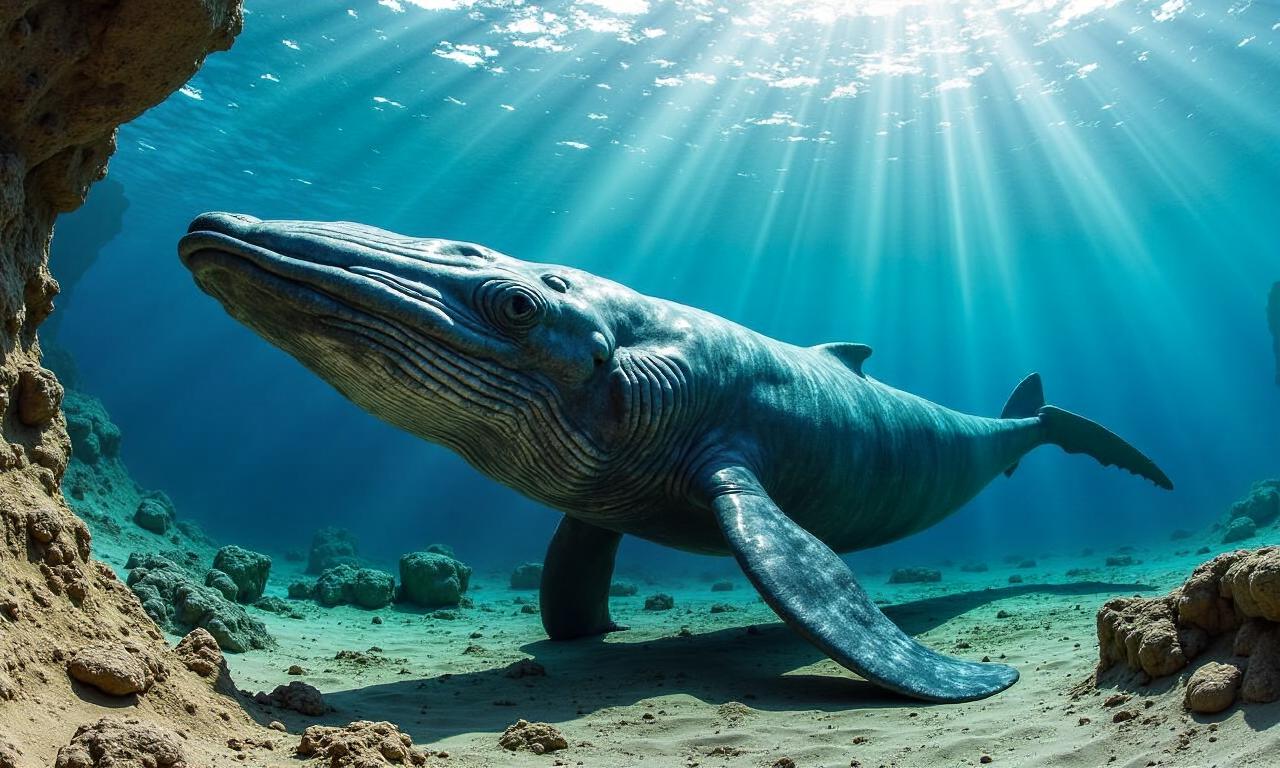
Ninoda.com – Scientists have uncovered a massive whale graveyard dating back five million years, nestled deep beneath the surface of the southeast Indian Ocean. This underwater necropolis, spanning over 1,200 kilometers in length, lies within the Diamantina fracture zone—a geologically active region characterized by deep-sea ridges and trenches. The site’s profound age and sheer scale have astonished researchers, with some of the fossilized remains estimated to be as old as 5.3 million years, offering a rare glimpse into the lives and deaths of ancient marine mammals.
Located approximately 7 kilometers below the ocean’s surface, the graveyard is a testament to the long-term preservation of organic material in the deep. The discovery, made through a series of 32 deep-sea expeditions, involved the meticulous collection of samples from 485 whale remains and active whale falls. Among the most significant finds was a complete skeleton of an extinct species, which has since been classified as *Pterocetus diamantinae*, a nod to the region where the site was found. This species, believed to be an ancestor of modern beaked whales, provides critical insights into cetacean evolution.
Ecological Significance of the Deep-Sea Graveyard
What makes this whale graveyard particularly remarkable is its role as a thriving ecosystem. As whale carcasses sink to the ocean floor, they create nutrient-rich habitats that support a diverse array of deep-sea life, including bioluminescent jellyfish, scavenging worms, and specialized crustaceans. These organisms, often referred to as “whale fall communities,” play a vital role in recycling marine nutrients. The site’s age and depth suggest that it has been a continuous feeding ground for millions of years, underscoring the long-term ecological impact of whale populations on deep-sea environments.
Among the remains, researchers identified a 5-meter Antarctic minke whale carcass, the largest specimen recovered during the study. This discovery highlights the site’s potential to serve as a natural archive of ancient whale species. The fossilized skull of *Pterocetus benguelae*, another beaked whale species dating back five million years, further enriches the understanding of how these creatures adapted to deep-sea conditions. The presence of multiple species suggests that the graveyard may have functioned as a convergence point for different whale populations, offering clues about migratory patterns and ancient oceanic currents.
Experts emphasize that the site’s remote location and challenging depth make it a unique challenge for exploration. Advanced sonar technology and remotely operated vehicles (ROVs) were essential in mapping the area and collecting samples. The team’s ability to document such a vast expanse of fossilized remains in a single location is unprecedented, with the site likely containing thousands more carcasses yet to be discovered. This deep-sea graveyard, dating back five million years, could redefine what is known about the historical distribution of whales and their ecological roles in prehistoric oceans.
“This whale graveyard dating back five million years represents a remarkable preservation of marine life over geological time,” noted Xiaotong Peng, a lead researcher from the Chinese Academy of Sciences. “The combination of age, depth, and biodiversity in this site is rare, and it may hold the key to understanding how whale ecosystems evolved before human influence.”
Stephen J Godfrey, a paleontologist at the Calvert Marine Museum, hailed the discovery as a milestone in marine science. “The significance of this site cannot be overstated,” he said. “It’s not just a graveyard; it’s a living museum of ancient life forms. The fact that whale remains from five million years ago are still supporting deep-sea biodiversity today is a stunning example of nature’s resilience.” Godfrey also highlighted the potential for future research, suggesting that continued exploration of the site could yield even more groundbreaking findings, including insights into climate change and oceanic shifts over millions of years.
As the study continues, the whale graveyard dating back five million years stands as a crucial piece of the puzzle in understanding the history of marine ecosystems. Its discovery not only expands the known record of whale fossils but also underscores the importance of deep-sea exploration in uncovering Earth’s hidden stories. With each new find, scientists gain a deeper appreciation for the intricate relationships between whales and their environment, a relationship that has persisted for millennia. This ancient site, now a focal point for research, may one day become a symbol of how deep-sea life has shaped and been shaped by the planet’s ever-changing seas.