‘Have you lost control?’ – BBC sports editor asks Fifa chief Infantino

Have you lost control?
Intense questioning of FIFA head before World Cup kicks off
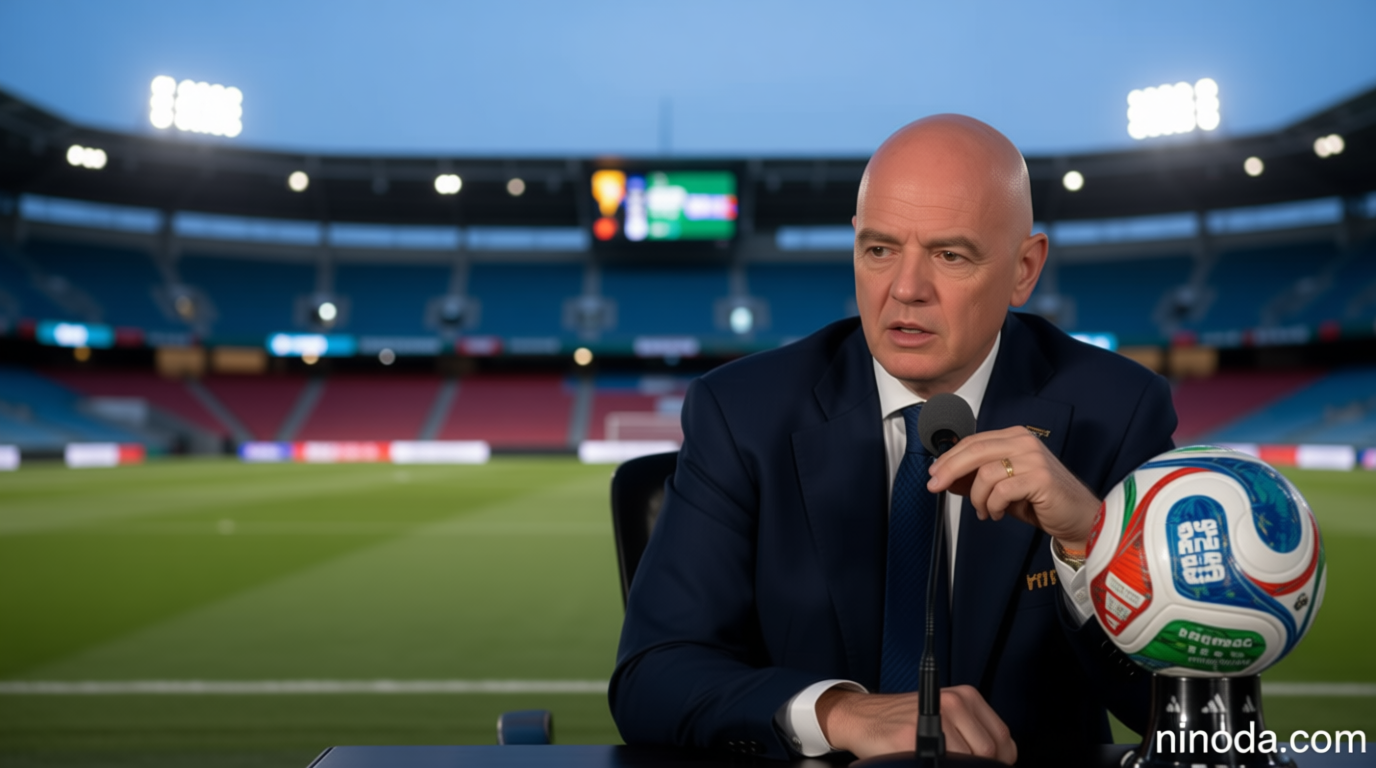
Ninoda.com – As the countdown to the World Cup began, BBC sports editor Dan Roan launched a pointed interrogation of FIFA president Gianni Infantino, challenging him directly with the question: “Have you lost control?” The query came amid mounting scrutiny of the organization’s leadership, following a series of controversies that have raised concerns about transparency and decision-making within the global football governing body. Infantino, who has been at the helm of FIFA since 2019, faced questions about his ability to address systemic issues, particularly after his recent call for the media to “chill” and “relax” regarding visa and ticketing challenges. This moment, captured in a candid interview, highlighted the tension between the organization’s ambitious goals and the public’s growing skepticism.
“Chill” and “relax” over visa and ticketing issues, Infantino advised reporters, but the sentiment seemed to fall flat with the audience. The FIFA president’s comments were delivered during a press briefing, where he emphasized the need for calm amid the logistical complexities of hosting one of the world’s most prestigious sporting events. However, the same event that was meant to showcase FIFA’s efficiency became a platform for critics to question its broader governance. The World Cup, which draws billions of viewers worldwide, is often seen as a litmus test for the organization’s ability to manage both the game and its public image. With this in mind, the focus on “Have you lost control” was not just a rhetorical question but a demand for accountability.
The Context of FIFA’s Leadership Challenges
The question of control over FIFA has been a recurring theme in recent months, fueled by allegations of corruption, financial mismanagement, and conflicts of interest. Despite efforts to reform the organization since the 2015 scandal that led to the resignation of Sepp Blatter, FIFA continues to face criticism for its opaque decision-making processes. The World Cup, set to be held in Qatar in 2022, has become a focal point for these concerns, with some pointing to the country’s human rights record and infrastructure challenges as further indicators of potential mismanagement. Infantino’s leadership, which has been marked by a mix of confidence and controversy, now stands under increased pressure to prove that such issues are being adequately addressed.
In the wake of the visa and ticketing controversies, the focus has shifted to how FIFA is handling its internal affairs. The organization has been accused of prioritizing political alliances over fairness in key decisions, such as the selection of host nations and the appointment of officials. These claims, combined with the recent revelation that a suspended referee was linked to “terror organisations,” have intensified the debate over FIFA’s leadership. The US official’s statement, which was shared in a separate report, added another layer of complexity to the discussion, suggesting that even the sporting world’s technical aspects are not immune to scrutiny. For many, the “Have you lost control” question is not just about the World Cup but about the broader governance of international football.
Implications for the World Cup and Global Football
The World Cup, a tournament that unites nations and celebrates the beauty of the game, is now at the center of a larger conversation about FIFA’s credibility. As the event approaches, questions about its organization, security, and the integrity of its competition have become more prominent. The “Have you lost control” challenge has prompted a deeper examination of FIFA’s strategies, from its handling of player transfers to its efforts to combat match-fixing. While the organization has made strides in modernizing its operations, critics argue that the recent controversies have exposed lingering vulnerabilities in its leadership.
FIFA’s response to these challenges will be critical in determining its standing in the eyes of the public and stakeholders. Infantino’s team has introduced new policies and initiatives aimed at restoring trust, including stricter financial controls and enhanced transparency measures. However, the effectiveness of these changes remains to be seen, especially as the World Cup’s stakes continue to rise. The event, which is expected to generate immense global interest, serves as a proving ground for FIFA’s ability to balance the interests of member nations, sponsors, and fans. With “Have you lost control” echoing in the media, the pressure is on to ensure that the tournament not only runs smoothly but also reflects the values of fairness and excellence that football is supposed to embody.
The recent scrutiny of FIFA’s leadership has also sparked broader discussions about the role of the media in holding the organization accountable. As the BBC’s Dan Roan highlighted during the interview, the media’s ability to question and report on FIFA’s decisions is essential for maintaining public trust. This dynamic has been amplified by the rise of digital platforms, which allow for real-time analysis and criticism of FIFA’s actions. The “Have you lost control” question, therefore, resonates beyond the confines of the interview room, reflecting a global audience’s demand for transparency and reform. For FIFA, the challenge is not just to address immediate issues but to rebuild a narrative that reassures fans of the sport’s integrity.